How Blepharoptosis Treatment Can Improve Droopy Eyelids
Drooping eyelids are more than just a cosmetic issue. They can actually impair your vision, lead to fatigue, and have a general impact on your life. If your upper lids are sagging more than they should, you might be suffering from a condition called blepharoptosis. However, with blepharoptosis treatment, you can have your condition corrected.
At Eyes and Eyelids, our team has the expertise required to provide you with the best care, especially when it comes to your eyes. Whether you have drooping lids due to old age or a more serious condition, the right care can make all the difference.
What Is Blepharoptosis and Why Does It Happen?
Blepharoptosis is the medical term used to describe droopy eyelids which occur as a result of weakness or malfunction of the levator muscle, the muscle responsible for raising the eyelid. The droopy eyelid may occur in one or both eyes and may be mild or severe.
The causes of blepharoptosis include:
Weakening of the eyelid muscle with age
Damage to the nerves or underlying neurological conditions
Congenital ptosis, or ptosis present at birth
Complications following eye surgery or injury
Myasthenia gravis, or underlying systemic conditions
How Does Blepharoptosis Impact Your Vision?
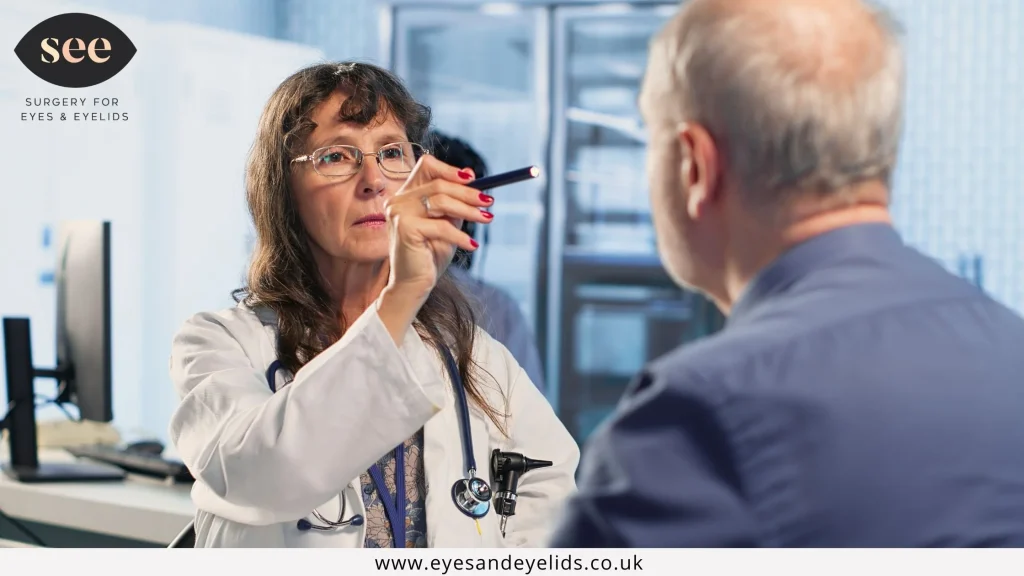
Severe blepharoptosis may impede your pupil completely, causing you to experience compromised vision. As a result, most patients are unaware that they are unconsciously compensating for this by raising their eyebrows, which in turn leads to headaches. In children, blepharoptosis may result in amblyopia, also known as lazy eyes, and this is why it is critical for children to seek medical attention for this condition.
Some patients may also experience other eye conditions during their diagnosis, such asmacular holes, retinal problems, and the need for eye floater treatment.
What Does Blepharoptosis Treatment Involve?
Blepharoptosis treatment usually commences with a thorough evaluation of the condition, the severity of drooping, and the functioning of the levator muscle, as well as the elimination of any possible causative factors.
The treatment options include:
Surgical treatment involving levator resection — The most common surgical technique, in which the levator muscle is either shortened or tightened in order to lift the eyelid.
Frontalis sling procedure — The procedure is often resorted to in cases of poor levator muscle function, in which the eyelid is suspended from the forehead muscle using a sling.
Ptosis crutches — The crutches are non-surgical and are attached to glasses in order to support the eyelid itself.
Is Blepharoplasty Similar to Blepharoptosis Treatment?
While both are closely related, they are not quite the same. However, blepharoplasty and blepharoptosis are both procedures that are addressed during a consultation by surgeons of blepharoplasty in London. Blepharoptosis surgery involves the levator muscle and corrects the position of the eyelid, while blepharoplasty involves removing extra skin, fat, and/or muscle from either the upper or lower eyelid for both aesthetic and functional reasons.
Some people may benefit from this procedure, especially those who are suffering from both ptosis and eyelid sag. However, this is assessed on a case-by-case basis at top blepharoplasty London clinics.
Can Other Eye Conditions Complicate the Treatment?
Eye floaters are shadows created by particles suspended in the vitreous humor of the eyeball. They are not directly related to ptosis, though patients with drooping eyelids may complain of floaters more because of their effect on light entering the eye. Treatment of floaters effectively eliminates the nuisance and provides greater comfort for the patient.
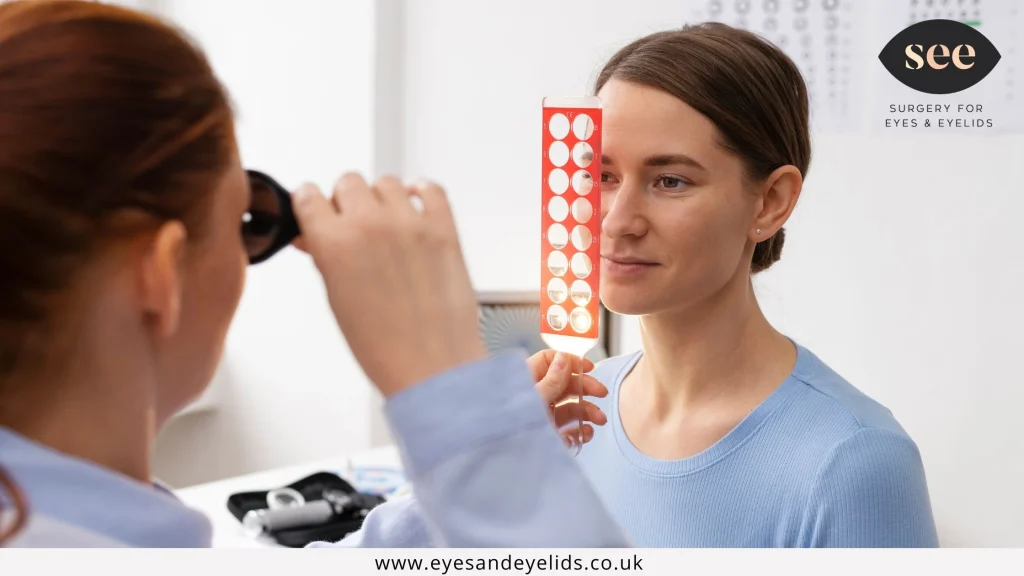
Yes. It is worth mentioning that while some patients may be suffering from droopy eyelids, they may be suffering from other eye problems that need to be treated. For example, while some may be suffering from serous retinopathy treatment needs, it is essential to understand that a patient may be suffering from a macular hole and therefore needs to be treated first before the eyelid problem is treated.
Additionally, a patient suffering from visual disturbances due to floaters may need eye floater treatment to improve the quality of the patient’s eyesight. Central serous retinopathy treatment affects the macula and may cause distorted and blurred vision, which may be mistaken for the impaired vision experienced due to ptosis.
What Should You Expect During Recovery?
The recovery time will depend on the procedure, and in most cases, one can expect:
Mild swelling and bruising for one to two weeks after the procedure
Eye drops or ointments to be used to prevent infection and dryness
Temporary sensitivity to light and blurred vision
Follow-up appointments to monitor progress during healing
Results will be visible within four to six weeks
Patients with other medical conditions, such as serous retinopathy treatment will be given a special recovery plan by their specialist.
Restoring Confidence and Vision
Blepharoptosis treatment delays can lead to more vision impairment, increased compensatory strain, and reduced chances of the best surgical outcomes. Whether you are looking for functional or cosmetic reasons, the best way to achieve the best outcomes is to seek treatment as soon as possible.
At Surgery for Eyes and Eyelids, we have a team of oculoplastic surgeons dedicated to providing the best care for your droopy eyelid condition, as well as other eye-related complications. Whether you are dealing with serous central retinopathy treatment or seeking any such treatment we have the best blepharoplasty that London has to offer along with the best outcomes with a patient-oriented approach. Book your appointment today.
Frequently Asked Questions
What is the primary cause of blepharoptosis?
Yes, if it interferes with vision or causes eye strain, then immediate medical action is required.
Is the treatment of blepharoptosis covered by insurance?
The treatment of blepharoptosis may be covered if the drooping of the eyelid impairs the patient’s vision to a great extent, but it is not covered if the drooping is for cosmetic reasons.
How long will the results of a blepharoplasty last?
The results of a blepharoplasty in London will last for seven to ten years, but it may differ for different individuals.
Can the drooping of the eyelid come back?
The drooping of the eyelid may come back, but it is rare if the patient adopts a healthy lifestyle.
Is a macular hole and ptosis related?
A macular hole and ptosis are not related, but a macular hole and ptosis may be associated with each other, and a complete eye examination can reveal the presence of all the eye conditions that need to be treated.